

Ragdoll cats are a beloved breed of feline known for their docile nature and affectionate personalities. But have you ever wondered where these cats come from? The origin of Ragdoll cats is a fascinating story that dates back to the 1960s.
It all began in Riverside, California when a woman named Ann Baker started breeding cats with the goal of creating a new breed that was friendly, sociable, and easy-going. She started with a white female cat named Josephine who had a litter of kittens that were all friendly and affectionate.
Baker continued to breed these kittens with other cats, including Burmese and Persian breeds, to create the Ragdoll cat breed. Over time, the Ragdoll cat became a recognized breed, with its unique characteristics and temperament.
So, where did Ragdoll cats originate from? The answer is simple – they were created in California in the 1960s through careful breeding and selection.
Key Takeaways
- Ragdoll cats were created in the 1960s in California by a woman named Ann Baker.
- Baker bred cats with the goal of creating a new breed that was friendly, sociable, and easy-going.
- The Ragdoll cat breed was created through careful breeding and selection with other breeds, including Burmese and Persian cats.
- Ragdoll cats have unique characteristics and a docile nature that make them a beloved breed of feline.
- The origin of Ragdoll cats is a fascinating story that highlights the dedication and commitment of breeders to create a new and unique breed of cat.
The Development of the Ragdoll Cat Breed
The Ragdoll cat breed has a unique history. It all began in the 1960s when a cat named Josephine, a semi-feral white female cat, gave birth to a litter of kittens. Josephine was owned by Ann Baker, a Persian cat breeder who lived in California. One of the kittens from Josephine’s litter was different than the others. This kitten had a relaxed, floppy nature and a friendly disposition.
Ann Baker took notice of this kitten’s unique characteristics and decided to breed more cats with this trait. She named this breed “Ragdoll” due to the cats’ tendency to relax and go limp like a ragdoll when picked up.
The Development of the Ragdoll Cat Breed
| Year | Event |
|---|---|
| 1965 | Ann Baker registers the “Ragdoll” cat breed with the International Cat Association (TICA). |
| 1971 | Ann Baker leaves TICA and founds her own cat breeding association called the “Ragdoll Fanciers Club.” |
| 1993 | The Ragdoll Fanciers Club is dissolved, and the Ragdoll breed is recognized by all major cat registries. |
Today, the Ragdoll cat breed is recognized by various cat registries and has become one of the most popular cat breeds in the United States.
The Ragdoll cat breed’s distinct characteristics can be attributed to the selective breeding practices implemented by Ann Baker. She was known to breed cats that were extremely docile, had a relaxed nature, and were friendly to people. Ann Baker also bred cats that had a certain physical appearance, such as a pointed coat pattern and blue eyes.
Since then, Ragdoll cat breeders have continued to refine and improve the breed. Breeders have focused on creating cats with the desired physical traits and personality traits that make the Ragdoll such a beloved breed.
The Ragdoll cat breed’s development is a testament to the value of selective breeding practices. By breeding cats with desirable traits, breeders were able to create a unique and wonderful breed of cat that is loved by many.
Ragdoll Cat Breed Characteristics
When it comes to Ragdoll cats, their characteristics set them apart from other cat breeds. From their physical appearance to their temperament, Ragdoll cats have a distinct personality that makes them beloved by many cat enthusiasts.
Ragdoll Cat Breed Standard
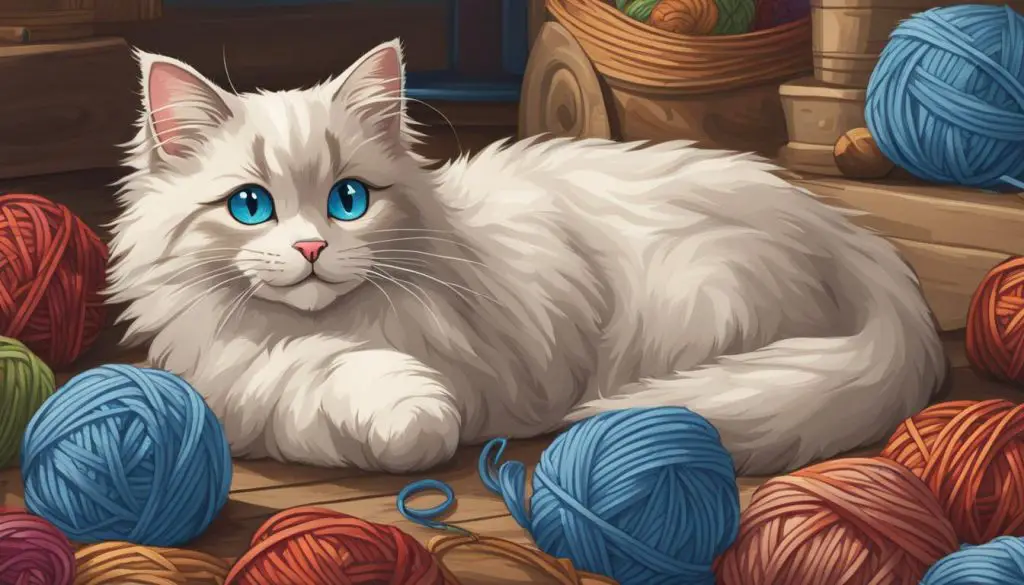
The Ragdoll cat breed standard sets the guidelines for the breed’s physical appearance. According to the Cat Fanciers’ Association (CFA), Ragdoll cats are large, heavy cats with a semi-long, silky coat. They have a broad, modified wedge-shaped head, and their eyes are a vivid blue.
Their coat comes in four patterns: colorpoint, mitted, bicolor, and lynx. The colorpoint pattern is the most well-known and is marked by a darker face, ears, tail, and legs, with a lighter body. The mitted pattern includes white paws and chin, and the bicolor pattern has a white inverted “V” on their face and a white belly. The lynx pattern has a tabby-like stripe pattern on their face and body.
Ragdoll Cat Breed Temperament
One of the most distinguishing characteristics of the Ragdoll cat breed is their gentle and affectionate nature. They love to be held and cuddled, and they are known for their relaxed demeanor. Ragdoll cats are often compared to dogs because of their loyalty and their tendency to follow their owners around.