
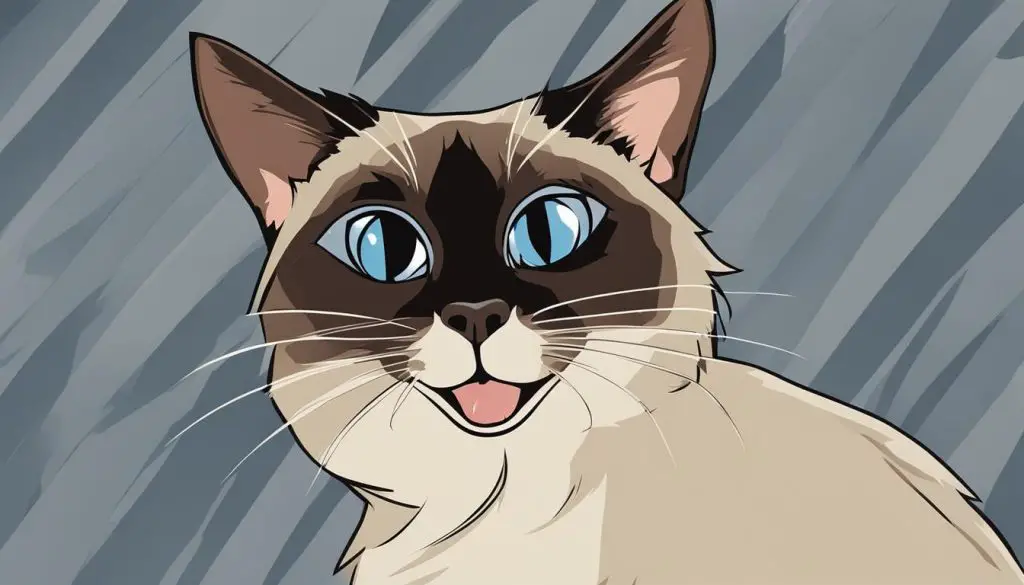
If you are considering getting a Siamese cat, one thing you should know is that they are known for their vocalization habits. Siamese cats are a breed of cat that are more vocal than other breeds, with their meowing being distinct and recognizable.
Many Siamese cat owners describe their cats as being chatty and constantly meowing, making them quite noisy compared to other cats. However, this vocalization is a unique characteristic of the breed and is not necessarily a sign of distress or pain.
Siamese cats have been around for centuries, originating from Thailand, where they were kept by royal families. Their vocal nature can be attributed to their social nature and history of being treated like royalty.
If you are a first-time Siamese cat owner, it is important to understand their vocal nature and what their meowing means. By doing so, you can better understand and communicate with your cat, building a stronger and more fulfilling relationship.
Key Takeaways:
- Siamese cats are a breed known for their vocalization habits
- Siamese cats have been around for centuries, originating from Thailand
- Their vocal nature can be attributed to their social nature and history of being treated like royalty
- Understanding your Siamese cat’s meowing can lead to a stronger relationship
- Vocalization is a unique characteristic of Siamese cats and not necessarily a sign of distress or pain
Understanding Siamese Cat Communication
Siamese cats are famous for their vocal nature. They use various sounds and behaviors to communicate with their surroundings. Siamese cat chatter is one of their unique ways of communication, where they produce a rapid staccato sound with their teeth chattering.
Siamese cats also use meows, purrs, growls, and hisses to communicate different needs and feelings. Siamese cats and their sounds convey a range of emotions, including happiness, hunger, anxiety, or discomfort.
Another way Siamese cats communicate is through body language. They use their tails, ears, and posture to express their emotions and intentions. For example, if a Siamese cat’s ears are flat, it might indicate fear or aggression, while a wagging tail suggests contentment.
To understand Siamese cat communication, it is essential to pay attention to their sounds and body language. Training yourself to recognize different Siamese cat sounds and their meanings is crucial to interpret their messages accurately.
“Siamese cats are highly intelligent and social animals that require mental stimulation and attention from their owners. Understanding their communication patterns can help you build a stronger bond with them and ensure their well-being.”
Siamese cats are affectionate and loyal companions that express their emotions through a range of sounds and behaviors. By understanding Siamese cat communication, you can respond appropriately to their needs and feelings, strengthening your relationship with them.

The Different Meow Patterns of Siamese Cats
Siamese cats are known for their vocal personalities, with distinct meow patterns that reflect their moods and needs. Understanding these meows can help you communicate better with your feline friend and meet their needs more effectively. Let’s explore the different types of Siamese cat meow patterns and what they signify.
| Meow Pattern | Meaning |
|---|---|
| Short, loud meow | Attention-seeking meow, meaning “pay attention to me” |
| Rapid, high-pitched meow | Excited or anxious meow, often heard during playtime or when anticipating food |
| Low, growling meow | Aggressive or angry meow, usually accompanied by other body language like hissing or tail fluffing |
| Chirping or trilling | Happy, friendly meow, often heard when greeting their owners or other cats |
| Prolonged, mournful meow | Sad or lonely meow, often heard when a Siamese cat is separated from their owner or other cats |
It’s important to note that these meow patterns are not universal and may vary from cat to cat. Additionally, Siamese cats may use a combination of meows to convey their message more effectively. If you’re unsure about the meaning of your Siamese cat’s meows, pay attention to their body language and context to get a better understanding.
In the next section, we’ll explore the various sounds and frequencies that Siamese cats produce in their vocalizations.

Siamese Cat Sounds and Frequencies
Siamese cats are known for their distinct vocalizations, producing a range of sounds with varying frequencies.
| Sound | Frequency | Meaning |
|---|---|---|
| Trilling | High pitch | A friendly greeting or excitement |
| Chattering | Chirping | Curiosity, excitement, or frustration |
| Growling | Low pitch | Aggression or defense of territory |
| Hissing | High pitch | Fear or anger |
| Yowling | Low and drawn-out | Mating or territorial behavior |
| Screeching | High and piercing | Pain, fear, or distress |
Trilling is a common Siamese cat sound, with a high-pitched frequency that typically communicates a friendly greeting or excitement. Chattering sounds, on the other hand, are more akin to chirping and can indicate curiosity, excitement, or frustration. Growling, hissing, and screeching sounds are usually associated with negative emotions like fear, aggression, and pain, respectively. Yowling, on the other hand, is a low and drawn-out sound that is often associated with mating or territorial behavior.
Siamese cats also produce a unique trilling sound that is similar to a bird’s chirping, often used as a means of communication with their owners. This sound is typically produced when a Siamese cat is feeling content or happy.