

If you’re considering adding a feline friend to your family, you may have come across the Persian cat breed. Known for their long, luxurious coats and expressive facial features, Persian cats are a popular choice among cat enthusiasts. But are Persian cats a rare breed? Let’s explore the Persian cat breed and shed some light on their rarity factor.
Persian cats are considered an exotic and unique breed, but whether they are rare or not is debatable. While they are not as commonly found as domestic shorthair cats, Persian cats are not necessarily hard-to-find or scarce, either. However, due to their low population and limited availability, they can be considered a somewhat uncommon cat breed.
Persian cats have a long, thick coat that requires regular grooming and maintenance. Their unique coat is one of their defining characteristics, with variations such as solid, bicolor, tricolor, and tabby patterns. Their large, round eyes and short, broad faces also contribute to their distinct appearance.
Persian cats have been around for centuries, with their roots in the Middle East. Over time, they have evolved into different sub-breeds, such as the Himalayan and Exotic Shorthair. Today, Persian cats are recognized by various cat associations and clubs, and their breeding standards are closely monitored.
In terms of temperament and behavior, Persian cats are known for their gentle and affectionate nature. They are adaptable to various living situations, including apartment living, and do well with children and other pets. However, they do require regular grooming and specialized care due to their long coats.
Overall, Persian cats can be considered a rare and distinctive breed due to their limited numbers and exclusive status. Those who appreciate their exquisite beauty and unique characteristics will undoubtedly treasure them as a rare and coveted pet choice.
Key Takeaways:
- Persian cats are not necessarily a rare breed, but they are considered an exotic and uncommon cat variety.
- Their long, luxurious coat and expressive facial features are defining characteristics of the breed.
- Persian cats have been around for centuries and have evolved into different sub-breeds.
- They are known for their gentle and affectionate nature, but require regular grooming and specialized care.
- Persian cats can be considered a rare and distinctive breed due to their limited numbers and exclusive status.
When it comes to feline beauty, Persian cats are undoubtedly one of the most visually stunning breeds. With their luxurious, long coats and adorable flat faces, it is no wonder that they are a popular choice for many cat lovers. Let’s explore some of the unique characteristics and appearances of Persian cats.
Persian Cat Colors and Types
Persian cats come in a wide variety of colors and patterns, including white, black, cream, silver, and more. Additionally, there are several types of Persian cats, including the doll-faced Persian, the flat-faced Persian, and the traditional Persian. The doll-faced and traditional varieties have a less pronounced muzzle than the flat-faced Persian, which is known for its distinctive squished-in face.
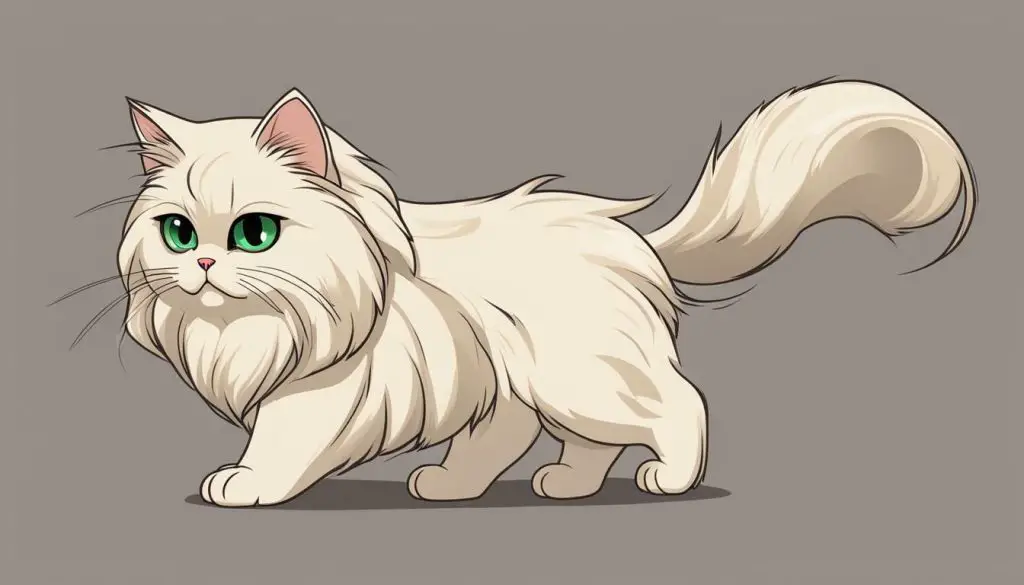
The Persian cat’s long, luxurious coat is one of its most defining features. They have a dense undercoat and long, silky topcoat that can come in a variety of colors. There are also different patterns that Persian cats can have, such as a solid color or a colorpoint pattern.
Persian Cat Size
Persian cats are considered medium to large-sized cats, with an average weight of 7-12 pounds. Their short, stocky build gives them a cuddly and plush appearance that many find irresistible.
Persian Cat Facts and Information
In addition to their unique appearance, there are several interesting facts and pieces of information to know about Persian cats. They are known for being affectionate and loving pets, although they may require more grooming than some other breeds due to their long coats. Additionally, Persian cats have a lifespan of around 12-16 years, making them a long-term commitment for their owners.
Overall, Persian cats are a visually stunning and fascinating breed with several unique characteristics and appearances. Whether you are drawn in by their luxurious coats or their affectionate personalities, Persian cats are a beloved choice for many cat lovers.
Persian Cat History and Origin
The Persian cat breed has a long and fascinating history that dates back centuries. It is believed that the breed originated in Persia (modern-day Iran), where they were highly prized for their luxurious coat and sought after as pets.
The exact origins of the Persian cat are unclear, but it is believed that they are descendants of wildcats from the mountainous regions of Persia. These cats were then selectively bred over time to develop the distinct characteristics that we associate with Persian cats today.
The first Persian cats were imported to Europe in the 17th century and quickly gained popularity among nobility and high society. In the 1800s, British breeders began developing and refining the breed to create the flat-faced Persian cats that we know today.
Throughout history, Persian cats have been beloved companions and loyal pets. Their popularity has only continued to grow over time, and they are now one of the most popular cat breeds in the United States and around the world.
When considering adopting a Persian cat, it’s important to understand their temperament and behavior to ensure a proper fit for your household and lifestyle. Persian cats are known for their placid and gentle nature, making them great companions for families and individuals alike. These felines are often described as calm and affectionate, enjoying cuddles and lounging around with their humans.
However, their long hair coat requires regular grooming to avoid mats and tangles, making them a higher maintenance breed than some