

If you’re considering getting a Tonkinese cat or already own one, you might be wondering if they are prone to hairballs. While hairballs are a common concern for many cat breeds, including the Tonkinese, understanding their grooming needs and digestive system can help you prevent and manage hairball issues effectively.
Tonkinese cats are affectionate and playful, with a curious nature that makes them great companions. They are a cross between Siamese and Burmese cats and inherit several traits from both breeds.
- Tonkinese cats are a cross between Siamese and Burmese cats and have unique traits inherited from both breeds.
- Like many cat breeds, Tonkinese cats are prone to hairballs, but preventative measures can minimize the risk of hairball formation.
- Understanding the feline digestive system and grooming needs specific to the Tonkinese breed can help you prevent and manage hairball issues effectively.
Understanding the Tonkinese Cat Breed
Tonkinese cats are a unique breed with a distinct set of characteristics. They are a cross between Siamese and Burmese cats and were first recognized as a breed in the 1960s. Tonkinese cats have a medium build and are known for their muscular physique and athletic ability. Their short, silky fur comes in a variety of colors, including lilac, chocolate, and blue.
Their playful and social personalities make them popular family pets. They are highly intelligent and can learn tricks and even play fetch. Tonkinese cats are also known for their vocalizations and tend to be very chatty with their owners.
When it comes to their susceptibility to hairballs, Tonkinese cats fall in line with other cat breeds. While hairballs can be a common issue for cats, there are certain factors that may increase the risk of hairball formation in Tonkinese cats.
Understanding the Tonkinese cat breed’s unique characteristics can help us determine how to manage their grooming needs and minimize the risk of hairball formation.
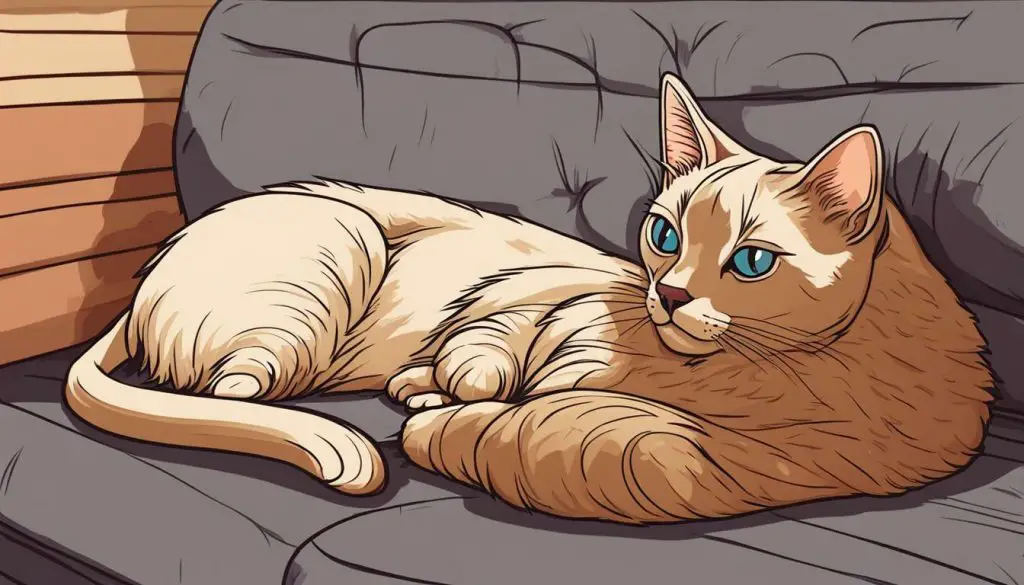
The feline digestive system is a complex process that allows cats to extract nutrients from their food. The journey begins with the mouth where the food is chewed and mixed with saliva. From there, it enters the esophagus and travels to the stomach.
Once in the stomach, digestive enzymes and acids break down the food further. The partially digested food then moves to the small intestine where it is absorbed into the bloodstream. The remaining waste material moves to the large intestine and eventually exits the body through the rectum.
While the digestive system is generally efficient, it can be susceptible to issues like gastrointestinal problems and hairball formation. Hairballs occur when cats ingest hair during grooming, and the hair collects and forms a ball in the stomach. This can cause discomfort and potentially lead to gastrointestinal issues if not addressed.
Factors that increase the likelihood of hairball formation include long hair, poor grooming habits, and underlying health issues. However, maintaining good grooming practices and providing a balanced diet can minimize the risk of hairball formation.

It’s important to monitor your Tonkinese cat’s grooming habits and digestive health to ensure their well-being. If you notice any signs of gastrointestinal issues or hairball symptoms, such as vomiting or constipation, consult with your veterinarian.